X-ray Micro-Technology (XMT)
Prof. Dr. Venera Weinhardt [Contact]
Welcome
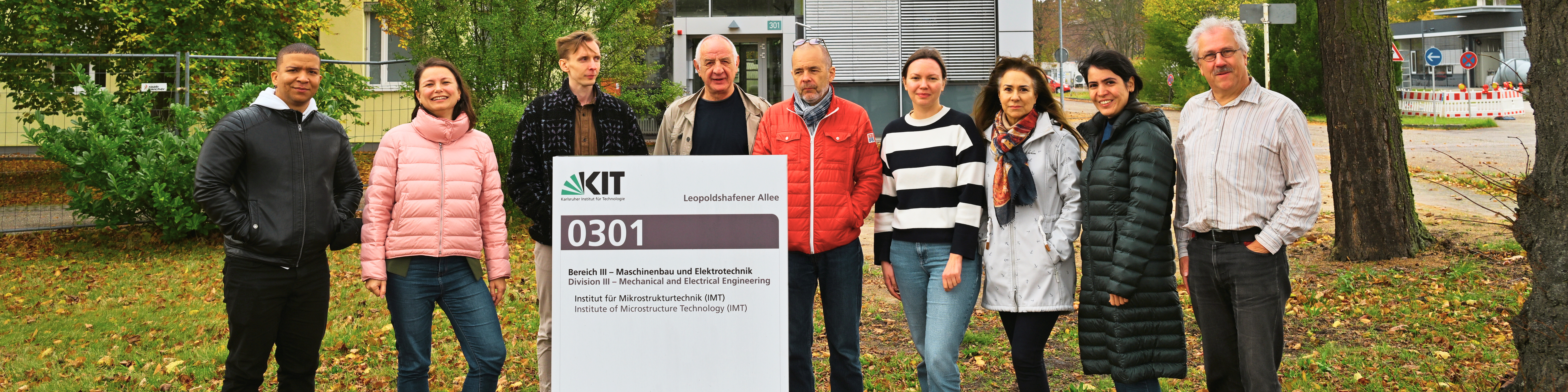
...to the Weinhardt lab! X-ray imaging is a powerful technology that has been extensively used in medical diagnosis and industrial non-destructive inspection. We are working in this exciting, fast-developing field, with expertise at the interface of micro- and nanofabrication, optical technologies, and machine learning.
Our department works on technological developments in micro- and nano-X-ray imaging across multiple structural scales, focusing on laboratory solutions accessible to the broader research community. We develop novel sample preparation technologies, imaging methods, and algorithms for quantitative analysis, including AI-driven image segmentation methods. For our work, we have established a set of tools and resources available only within our department.

|
Multimodal X-ray Imaging (MXI) – Prof. Dr. Venera Weinhardt [Contact]
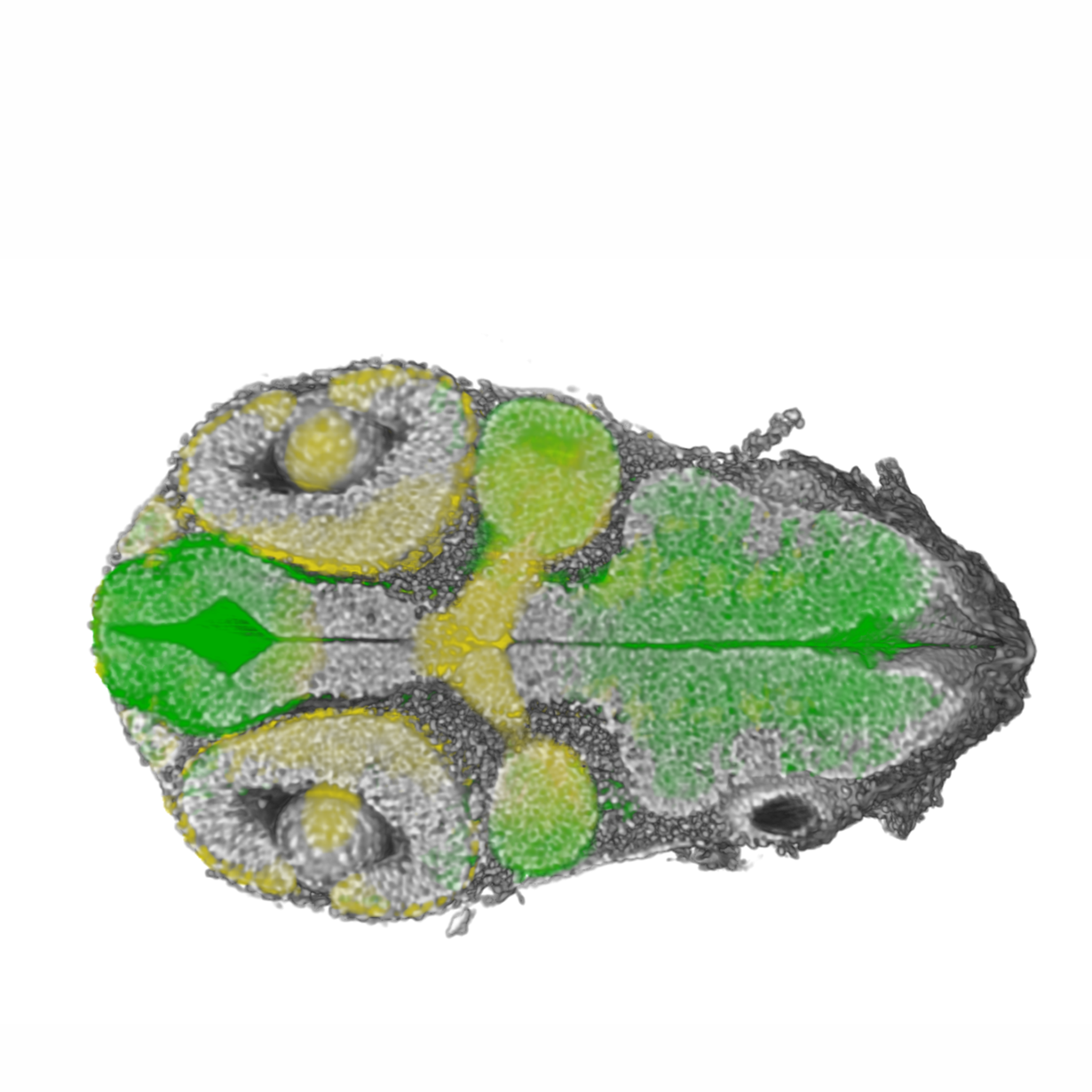
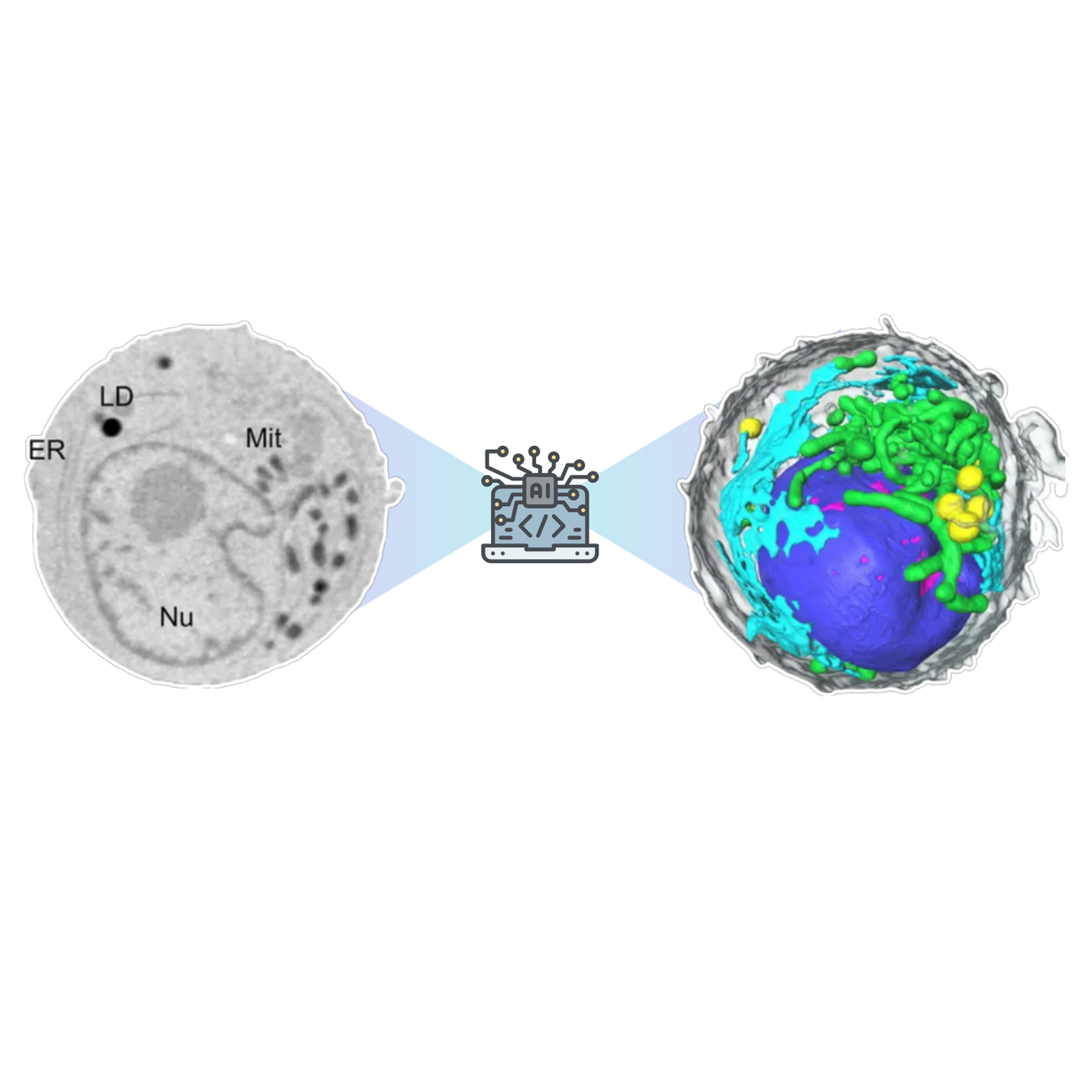
The MXI Lab develops innovative imaging techniques at the micro- and nanoscale across a range of biological scales, emphasizing user-friendly laboratory solutions to make these advanced tools accessible to the biomedical community. A central focus of our group is soft X-ray tomography (SXT), which has evolved into a high-throughput, quantitative imaging method capable of detailed 3D visualization and chemical analysis of whole cells in their native state without staining or labelling. The group is pioneering the development of novel imaging geometries and sample handling, and, in collaboration with industry, implementing them into the first commercial laboratory SXT scanner. Complementing SXT, the group integrates correlative imaging approaches, developing axial tomography compatible with SXT sample holders and enabling combined super-resolution fluorescence and cryogenic X-ray tomography, a capability unique to our group. This work is supported by the ERC Synergy NanoX project [link to website?] and the Marie Skłodowska-Curie CLEXM doctoral network [https://clexm.eu/], which supports advances in nanoscale X-ray tissue imaging and correlative expression of molecular and structural information using multimodal imaging.
|
|
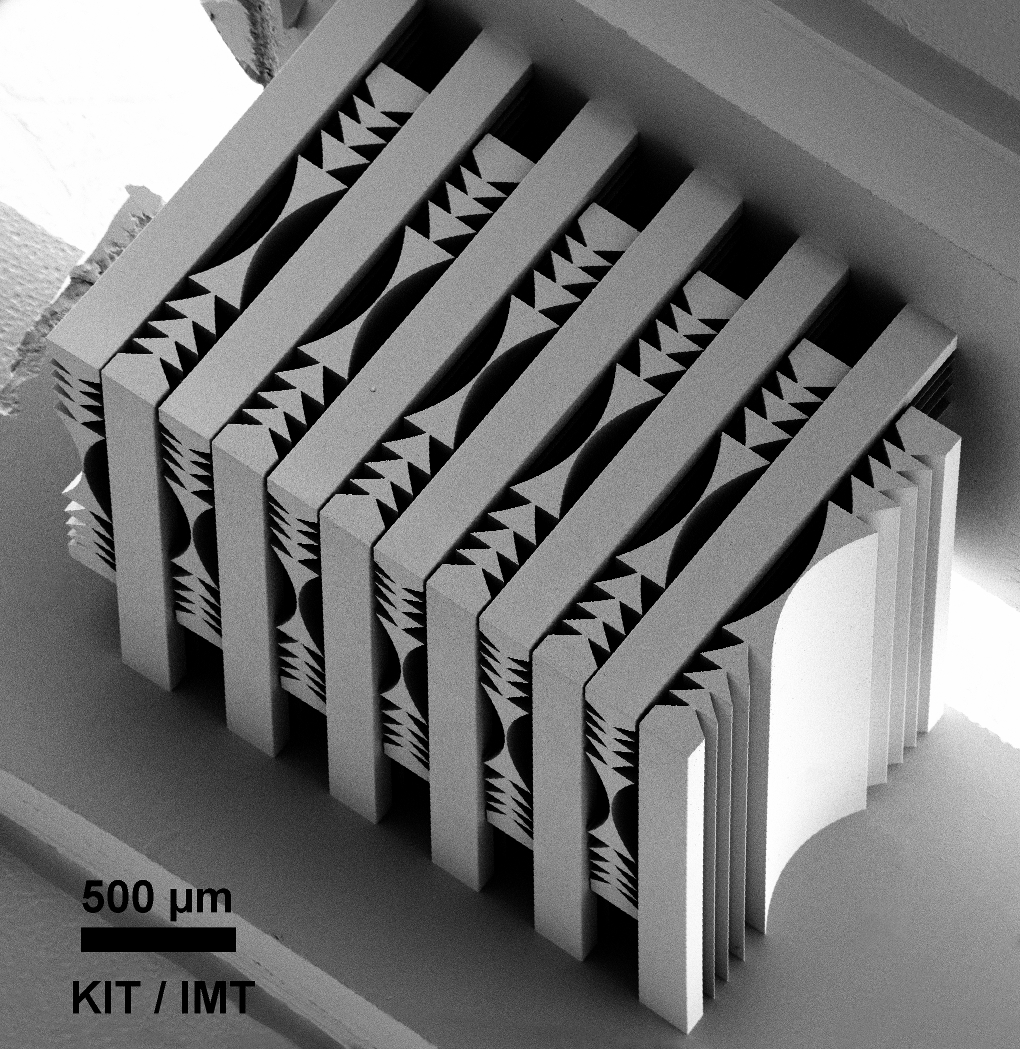
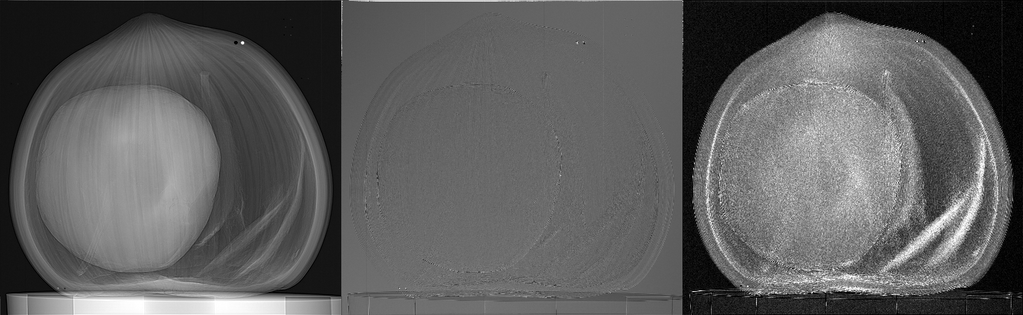
Applied X-ray Imaging Systems (XIS) - Dr. Arndt Last [Contact]In the XIS group, we develop advanced X-ray optics, focusing on compound polymeric refractive lenses and prism lenses for beam shaping, as well as high-aspect-ratio gratings for phase-contrast and dark-field imaging. Polymers as lens materials have the advantage of having virtually no effect on the polarisation direction of the radiation. They are X-ray transparent and non-crystalline, meaning they generate very little X-ray scattering background. Electroplated metals such as gold and nickel are used for X-ray gratings and lenses for high photon energies. Our core expertise lies in deep X-ray lithography and related microfabrication processes to realize high-quality, low-roughness microstructures with very small feature sizes and large aspect ratios. We design and optimize zoom and beam-shaping X-ray optics, and low-absorption large-aperture prism lenses for use at synchrotrons, laboratory X-ray tubes, and XFELs. Our group also develops and refines processes and geometries for X-ray gratings to achieve larger areas, higher structures, smaller periods, and improved mechanical stability and homogeneity for future commercial imaging systems in medicine and materials science.
|
|
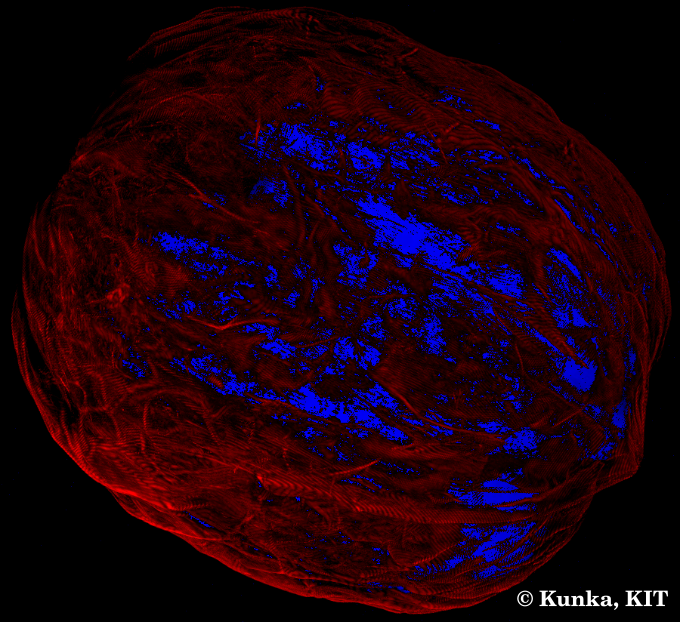
Correlative X-ray Imaging (CXI) - Dr. Danays Kunka [Contact]The Correlative X-ray Imaging (CXI) group develops novel 2D and 3D X-ray optical elements to enable multi-modal imaging that combines small-angle scattering, absorption, and phase contrast for biomedical and materials science applications at synchrotrons and laboratory sources. Our work focuses on lithography-based process and methodology development to pattern these optics, including fabrication and characterization of advanced Hartmann and Shack–Hartmann sensor masks for probing dynamic processes. A key research line is the tailored synthesis and optimization of polymers for X-ray lithography, improving physico-chemical properties to realize high-aspect-ratio structures for single-shot imaging techniques that can visualize weakly absorbing specimens and composites with similar absorption by exploiting phase and small-angle scattering contrast. |
AI-assisted Imaging Technologies (AIT) - Prof. Dr. Venera Weinhardt [Contact]The AI-assisted Imaging Technologies (AIT) group develops automated machine- and deep-learning approaches to support the development of X-ray imaging methods, such as X-ray tomography, for the automatic analysis of 3D volumes. We design and implement end-to-end, AI-driven pipelines, ranging from robust segmentation and feature extraction to high-throughput quantitative analysis. By integrating state-of-the-art deep learning models across multiple stages of the imaging workflow, we not only reduce subjectivity and the time-consuming nature of manual analysis but also unlock new ways to interpret complex biological data and fully exploit the potential of modern X-ray imaging techniques. |
Open Positions
We are actively seeking talented, motivated individuals with an interest in X-ray imaging technologies to join our team, reinforce and expand our research portfolio. We are offering diverse topics across mechanical engineering, biology, and computer science at the following levels:
Bachelor's/Master's thesis
Visiting students/ researchers
If you are interested, please email [link] with a brief introduction about yourself, including your CV and transcript of records.
For Postdoc positions and Ph.D. thesis topics, please see [link].
Unsolicited applications:
If you have your own idea for the project that you can realize in our department, we encourage you to apply for a fellowship to carry it out. We will assist in your application for an external grant, such as:
Walter Benjamin-Programm from DFG
Marie Skłodowska-Curie Fellowship
Georg Forster Research Fellowship
…and others
News

IMT researchers at KIT published "SHI: a framework for spatial harmonic imaging" in Scientific Reports. SHI is a modular Python framework for multicontrast X-ray imaging using periodic modulators (e.g., Hartmann masks). It automates acquisition, higher-order-harmonic retrieval, and CT preprocessing, extracting absorption, refraction, and scattering signals from a single exposure. Robust to large focal spots and optical imperfections, it reveals internal structures across a range of contrasts with fewer projections, reducing dose.
Read the full manuscript here